The Art of Flawless Makeup Application: Transform with Grace

ursustel.net – Makeup is not just a way to enhance one’s features; it’s an art form that allows individuals to express themselves and transform their appearance with grace. The key to achieving a flawless makeup application lies in understanding the basics, selecting the right products, and mastering the techniques that bring out the best in your natural beauty.

The Foundation of Flawlessness

Choosing the Right Base

The foundation of flawless makeup starts with the right base. It’s essential to select a foundation that matches your skin tone and type. Whether you prefer a liquid, powder, or cream formula, the goal is to achieve a natural-looking finish that evens out your skin tone without looking cakey.

Application Techniques

  • Tools of the Trade: Invest in good quality makeup brushes or sponges. A beauty blender or a foundation brush can make a significant difference in the application process.
  • Blend Like an Artist: Blend your foundation seamlessly into your skin. Start from the center of your face and work your way outwards. Use light, circular motions to ensure an even application.

Enhancing Your Natural Beauty

Contouring and Highlighting

Contouring and highlighting are techniques used to sculpt and define your facial features. Use a contour shade that’s a couple of shades darker than your skin tone to create shadows, and a highlighter that’s a couple of shades lighter to add dimension. Blend, blend, blend to avoid harsh lines.

The Power of Blush

Blush can transform your look by adding a healthy glow to your cheeks. Choose a shade that complements your skin tone and apply it to the apples of your cheeks, blending upwards towards your temples.

Eyes: The Windows to Your Soul

Perfecting Your Brows

Well-groomed eyebrows frame your face and can dramatically change your look. Use a brow pencil, powder, or gel to fill in any gaps and shape your brows. Remember, the key is to keep them looking natural.

Eyeshadow Magic

Eyeshadow can enhance the shape of your eyes and make them pop. Start with a neutral base and add depth with darker shades in the crease. Highlight the inner corner of your eyes to make them appear brighter.

The Drama of Eyeliner and Mascara

Eyeliner can define your eyes and create the illusion of shape. Whether you prefer a subtle line or a bold wing, practice makes perfect. Finish with mascara to add volume and length to your lashes, making your eyes the center of attention.

Lips: The Finishing Touch

Lip Liner and Lipstick

Lip liner is your best friend when it comes to achieving long-lasting lipstick. Outline your lips and fill them in before applying your lipstick. Choose a shade that complements your skin tone and the occasion.

Gloss or Matte?

The finish of your lipstick can change the entire vibe of your makeup look. Gloss adds a touch of glamour and moisture, while matte offers a more sophisticated and long-lasting finish.

Conclusion: Embrace Your Transformation

The art of flawless makeup application is about enhancing your natural beauty and feeling confident in your skin. Remember, makeup is a form of self-expression, and there are no strict rules. Experiment with different techniques and products to find what works best for you. With practice and patience, you’ll master the art of transforming with grace.
Visions of Hell in Art and Culture: The Hellscape

ursustel.net – The concept of Hell has fascinated humanity for centuries, serving as a powerful motif in art, literature, and culture. It is a realm of eternal punishment, a place of suffering and torment for the wicked. This article explores the various representations of Hell in art and culture, delving into the different interpretations and the impact they have had on our collective imagination.

The Origins of Hell

The idea of Hell can be traced back to ancient civilizations, where it was often depicted as a dark, subterranean world. In Mesopotamian mythology, for example, the underworld was ruled by the goddess Ereshkigal. Similarly, the ancient Greeks had their version of Hell, known as Hades, presided over by the god of the same name. These early concepts laid the groundwork for later, more elaborate visions of Hell in Judeo-Christian and Islamic traditions.

Hell in Religious Art

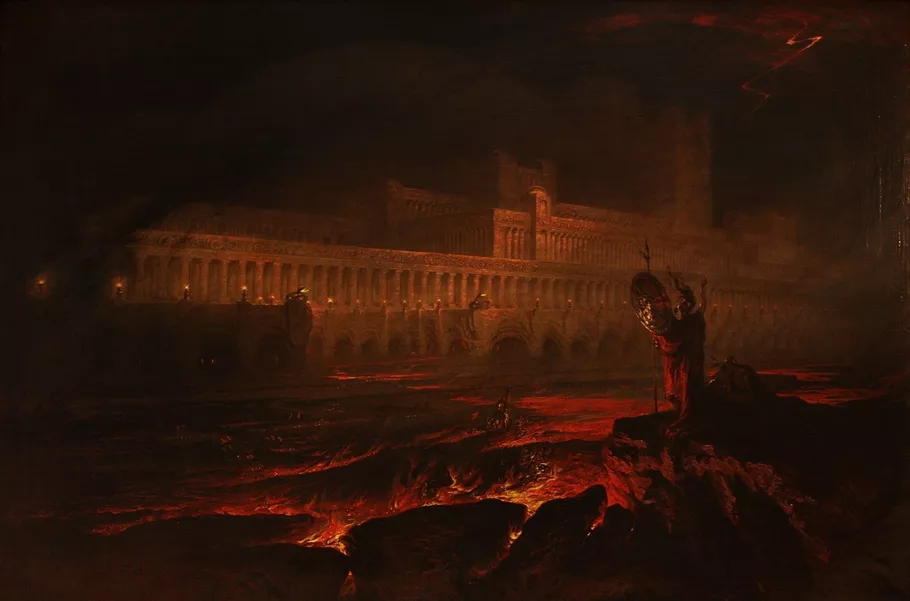
Religious art has been a primary medium for depicting Hell, with artists interpreting sacred texts to create vivid images of the infernal realm. The medieval period saw the rise of detailed illustrations of Hell in illuminated manuscripts, while the Renaissance brought forth masterpieces such as Hieronymus Bosch’s “The Garden of Earthly Delights” and Dante Alighieri’s “Inferno,” which inspired countless artists, including Sandro Botticelli and Gustave Doré.

The Literary Hellscape

Literature has also played a crucial role in shaping our understanding of Hell. Dante’s “Divine Comedy” is perhaps the most influential work, with its detailed nine circles of Hell. Other notable works include John Milton’s “Paradise Lost,” which portrays Satan’s rebellion and fall from Heaven, and the more contemporary “Inferno” by Dan Brown, which uses Dante’s work as a backdrop for a modern thriller.

Hell in Popular Culture

The concept of Hell has permeated popular culture, appearing in films, television shows, and video games. Movies like “The Exorcist” and “Hellraiser” tap into the fear of demonic possession and the horrors of Hell. Television series such as “Supernatural” and “The Good Place” offer modern takes on the afterlife, blending humor with existential questions. Video games like “Doom” and “Diablo” invite players to battle demons in hellish landscapes.

The Symbolism of Hell

Beyond its literal interpretations, Hell serves as a powerful symbol in art and culture. It represents the consequences of sin, the fear of death, and the struggle between good and evil. Artists and writers use the imagery of Hell to explore themes of morality, justice, and redemption, challenging viewers and readers to confront their own beliefs and fears.

Conclusion

The hellscape in art and culture is a multifaceted concept that has evolved over centuries. From religious iconography to modern entertainment, the depiction of Hell continues to captivate and terrify. As our understanding of the afterlife changes, so too will our artistic and cultural representations of Hell, ensuring that this dark realm remains a fertile ground for creative expression and contemplation.

Precision in Design: The Art of Detail

ursustel.net – In the world of design, the devil is often said to be in the details. But for those who practice the art of detail, precision in design is not a curse but a calling. It is the meticulous attention to the small, seemingly inconsequential elements that can elevate a design from merely functional to truly exceptional. This article delves into the significance of detail in design, exploring how precision can transform the ordinary into the extraordinary.

The Power of Precision

Precision in design is not just about accuracy; it’s about intention. Every line, curve, and edge is a deliberate choice that contributes to the overall harmony of the design. This level of detail requires a deep understanding of the materials being used, the functionality of the object, and the aesthetic principles that guide its creation.

In architecture, precision can mean the difference between a building that stands for centuries and one that crumbles in a storm. In product design, it can distinguish between a gadget that delights and one that frustrates. In graphic design, it can turn a layout into a visual feast that guides the eye and informs the mind.

The Craft of Detail

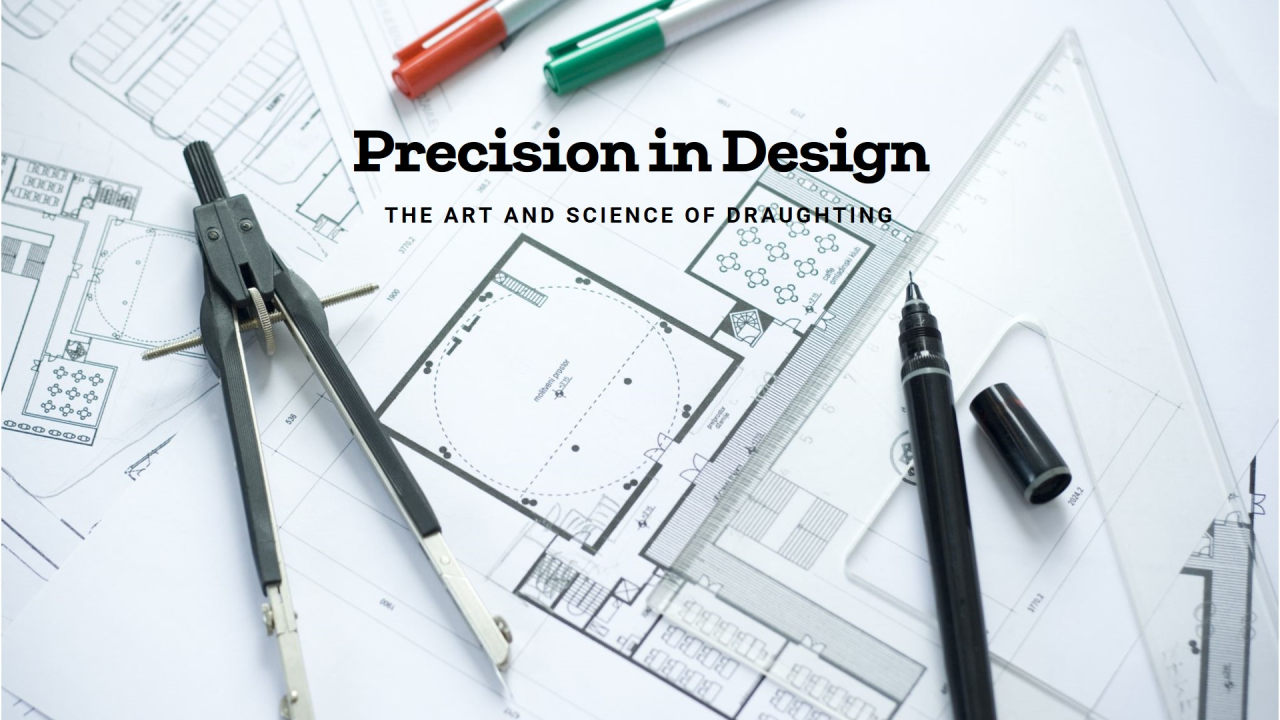
The craft of detail is a blend of artistry and science. It demands a mastery of tools and techniques, from the traditional to the digital. A designer must be able to visualize the end product in their mind’s eye and then translate that vision into reality, often working within the constraints of budget, materials, and technology.

This craftsmanship is not just about the end result; it’s also about the process. The joy of detail work lies in the journey, in the problem-solving and the experimentation. It’s about pushing boundaries and discovering new ways to achieve perfection.

The Importance of Context

Detail work is not done in a vacuum. The context in which a design will be used is crucial to its success. A chair designed for a bustling café must be sturdy and easy to clean, while a chair for a luxury hotel lobby can afford to be more delicate and ornate. A website for a financial institution needs to convey trust and reliability, while an entertainment site can be playful and experimental.

Understanding the user or viewer is key. Designers must consider how people will interact with their creations, what emotions they want to evoke, and how the design will fit into the larger environment.

The Impact of Detail

The impact of detail in design can be profound. It can make a space feel welcoming or intimidating, a product feel luxurious or cheap, a message feel urgent or mundane. It can influence how people perceive a brand, how they navigate a space, and how they interact with objects.

In a world where so much is mass-produced and generic, precision in design offers a counterpoint. It speaks to the value of craftsmanship, the beauty of individuality, and the power of thoughtful creation.

Conclusion

The art of detail is a celebration of precision in design. It is a commitment to excellence, a pursuit of perfection, and a recognition of the importance of the little things. For those who practice it, detail work is not just a job—it’s a passion, a way of seeing the world that reveals the beauty in every brushstroke, every stitch, and every pixel.

In a rapidly changing world, the art of detail remains a constant, a testament to the enduring value of care, attention, and craftsmanship. It is a reminder that, sometimes, it’s the smallest details that make the biggest difference.

Literature and Art: The Poetic Soul of Iran

Iran, a country with a rich tapestry of history and culture, has long been celebrated for its profound contributions to the world of literature and art. The poetic soul of Iran is deeply ingrained in its people, landscapes, and the very air that one breathes when walking through the ancient streets of cities like Isfahan, Shiraz, and Tehran. This article delves into the heart of Iran’s literary and artistic heritage, exploring the timeless beauty and profound influence of its poets, painters, and calligraphers.

The Literary Giants

Iran’s literary tradition is as old as the civilization itself. The country has produced some of the most revered poets in the Persian language, whose works have transcended time and geography to touch the hearts of millions worldwide. Among these literary giants are Ferdowsi, Rumi, Hafez, Saadi, and Khayyam, each of whom has left an indelible mark on the world’s literary landscape.

Ferdowsi’s “Shahnameh” (The Book of Kings) is an epic poem that encapsulates the history and mythology of ancient Persia. It is not just a literary masterpiece but also a symbol of Iranian identity and resilience. Rumi, a 13th-century poet, is celebrated for his mystical poetry that speaks of love, divine unity, and the beauty of the soul. His works, particularly “The Masnavi,” have been translated into numerous languages and continue to inspire people across the globe.

Hafez, the beloved poet of Shiraz, is known for his lyrical poetry that explores themes of love, wine, and mysticism. His ghazals (love poems) are filled with a deep sense of longing and spiritual quest, making him one of the most popular poets in Iran and beyond. Saadi’s moral stories and poems, collected in “Golistan” (The Rose Garden) and “Bustan” (The Orchard), offer profound insights into human nature and ethics.

Omar Khayyam, the mathematician-poet, is famous for his “Rubaiyat,” a collection of quatrains that reflect on the transient nature of life and the pursuit of pleasure. These works, translated and popularized in the West, have contributed significantly to the global appreciation of Persian poetry.

Visual Arts and Calligraphy

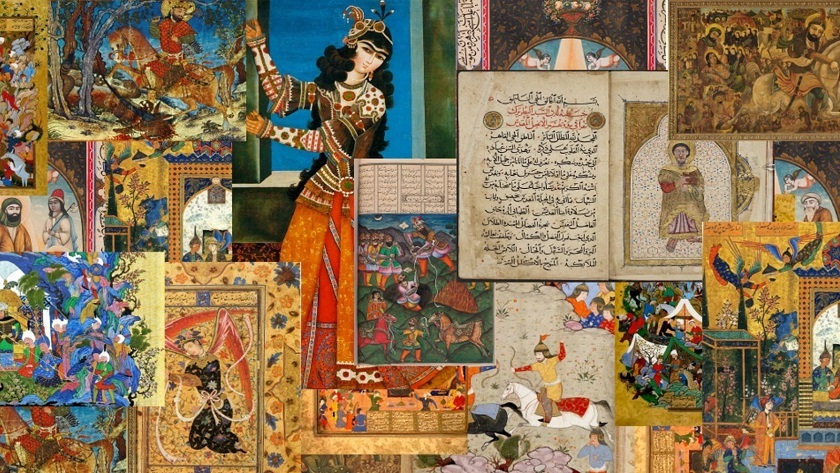
The visual arts in Iran are as rich and varied as its literature. Miniature painting, a delicate art form that flourished under the patronage of various dynasties, is characterized by its intricate detail and vibrant colors. These paintings often illustrated manuscripts of literary works, bringing the stories and poetry to life with exquisite beauty.

Calligraphy, the art of beautiful writing, holds a special place in Iranian culture. It is not just a means of communication but an expression of spirituality and aesthetic perfection. The Persian script, with its cursive elegance, has been used to adorn manuscripts, tiles, and architectural elements, showcasing the harmony between word and image.

Iranian architecture, too, is a testament to the country’s artistic prowess. From the stunning tilework of the Sheikh Lotfollah Mosque in Isfahan to the geometric precision of the Darb-e Imam shrine, Iranian buildings are masterpieces of design and craftsmanship. The use of calligraphy and geometric patterns in architectural decoration reflects the deep interconnection between art, spirituality, and daily life in Iran.

The Legacy

The poetic soul of Iran, embodied in its literature and art, is a testament to the enduring spirit of its people. Despite the vicissitudes of history, the works of Iranian poets and artists continue to inspire and provoke thought, reminding us of the universal themes that bind humanity together. The legacy of Iran’s literary and artistic heritage is a priceless gift to the world, a reminder of the power of beauty and the human spirit to transcend the barriers of time and space.

In conclusion, the poetic soul of Iran is a beacon of light that illuminates the path of human creativity and spirituality. Through its literature and art, Iran has contributed immeasurably to the cultural tapestry of the world, offering a glimpse into the depth and richness of its civilization. As we continue to explore and appreciate the works of Iranian poets and artists, we are reminded of the universal quest for beauty, truth, and the eternal questions of the human condition.